
Key Takeaways
- Pipe leaks often start small and subtle, but can quickly develop into major plumbing and structural problems if left unchecked.
- Common causes of leaks include corrosion, high water pressure, temperature changes, poor installation, and external physical damage.
- Even minor leaks can lead to serious consequences, including structural deterioration, mold growth, and higher water bills.
- Hidden or underground leaks are especially dangerous because they are harder to detect and may cause extensive property damage over time.
- Preventive maintenance, such as routine inspections, pressure regulation, and pipe insulation, is essential for reducing leak risks.
- Prompt repairs and professional plumbing services help protect property value and prevent costly emergencies in the long run.
Pipe leaks are a frequent issue in both residential and commercial properties, often beginning with subtle signs that homeowners may overlook. Even a small drip beneath a sink or a gentle trickle behind a wall can hint at ongoing plumbing problems that may require the attention of a New Braunfels plumber. What starts as a minor annoyance can quickly grow into a serious concern, causing water damage, increased costs, and even structural issues if not handled promptly.
Understanding why these leaks occur is crucial for maintaining a safe, efficient plumbing system. The causes of pipe leaks can vary widely, from environmental factors to poor installation, but the impact is always the same: neglected leaks can escalate into costly emergencies. By exploring the causes of these failures and how they worsen over time, property owners can better protect their investments and preserve the health of their plumbing infrastructure.
Common Causes of Pipe Leaks
Pipe leaks typically result from a combination of old age, environmental stress, poor workmanship, and physical interference. Some of the most prevalent causes include:
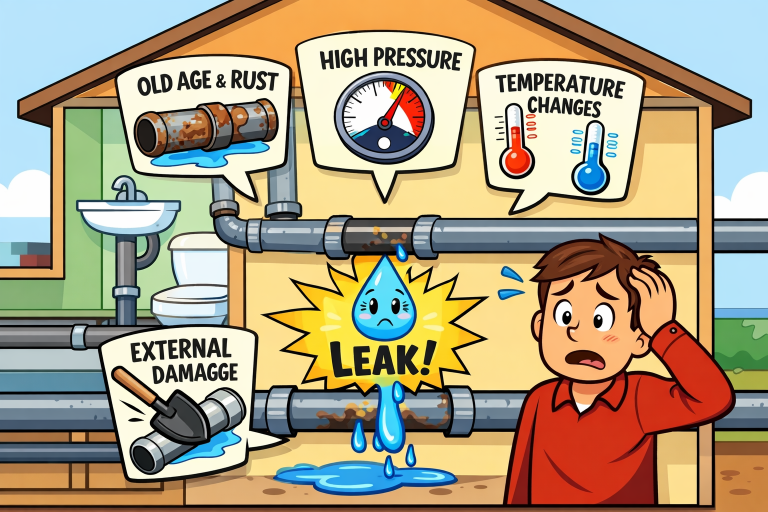
- Corrosion and Deterioration: As pipes age, especially metal varieties, they may corrode due to constant contact with water and various minerals. Poor water quality can accelerate this process, breaking down the pipe’s interior and leading to pinhole leaks or larger ruptures. Early detection and regular inspections help catch corrosion before it creates significant damage.
- High Water Pressure: Excessive water pressure can strain plumbing systems, especially at vulnerable points like joints and bends. Over time, fluctuating or persistently high pressure leads to small fissures, which eventually cause leaks. Installing pressure regulators is a crucial step in maintaining safe water levels.
- Temperature Fluctuations: Pipes expand and contract in response to temperature changes. Repeated cycles, such as those during freezing winters or intense heat waves, can cause pipes to crack or burst. Proper insulation is vital for pipes in attics, basements, and exterior walls.
- Poor Installation: The reliability of a plumbing system begins with proper installation. Using subpar materials, poor sealing methods, or making amateur mistakes can leave weaknesses that only get worse over time, increasing the likelihood of future leaks. When installing or replacing plumbing, expert help should always be sought.
- External Damage: Pipes can be damaged by external factors, such as home renovations, landscaping work, or shifting ground from weather events. Any digging or construction should be preceded by checks for pipe locations to prevent accidental damage.
How Pipe Leaks Escalate Over Time
Failing to address early signs of pipe leaks can transform a simple repair into an extensive restoration project. As leaks develop and expand, the consequences become more serious and costly:
- Structural Damage: Water escaping from leaks can penetrate walls, floors, and even the foundation of a home. Over time, persistent moisture weakens structures, leading to wood rot, crumbling drywall, and compromised flooring. According to HGTV, structures exposed to regular water can suffer long-term, sometimes irreversible, damage.
- Mold and Mildew: Damp environments are breeding grounds for mold and mildew, which grow easily around persistent leaks. These fungi not only damage building materials but also introduce health hazards, especially for those with allergies or respiratory issues. Mold remediation is an expensive and complex process once mold becomes entrenched.
- Rising Water Bills: Even tiny leaks can waste gallons of water over time. Many homeowners only notice the problem after experiencing a spike in water bills. Prompt identification and repair of leaks can save significant money each year.
- Outdoor and Underground Damage: Not all pipes are visible. Underground leaks—often caused by shifting soil or tree roots can erode landscaping, damage driveways, and even affect the foundation’s stability. This kind of damage is both difficult to detect and expensive to repair.
Preventive Measures and Maintenance
Prevention is always the best solution for plumbing issues. Proactive maintenance and prompt responses to warning signs can prevent leaks from escalating. Some effective strategies include:
- Routine Inspections: Scheduling annual or semi-annual inspections allows plumbers to spot weak points or early symptoms of leaks, such as minor corrosion or loose joints, before they become urgent problems.
- Pressure Regulation: Using water pressure regulators helps maintain consistent, safe pressure within plumbing systems, minimizing stress and the risk of bursts.
- Pipe Insulation: Especially important in climates with extreme temperatures, insulation keeps pipes at a stable temperature and prevents damage from expansion or contraction.
- Professional Installation and Repairs: Whenever new pipes are installed or major repairs are required, always employ experienced, licensed plumbers who use high-quality materials and follow building codes meticulously.
- Avoid Accidental Damage: Always check for underground or concealed plumbing before digging, drilling, or renovating around the home or property.
Final Thoughts
Pipe leaks may seem trivial at first, but neglecting them can be catastrophic. Understanding the primary causes and taking preventive steps is the best way to ensure the health and longevity of a plumbing system. Schedule regular inspections and address any issues immediately to prevent minor leaks from evolving into severe emergencies. With proper care, homeowners can avoid unexpected expenses and maintain a safe, sound property for years to come.


0 Comments