
Table of Contents

- Enhancing Vocabulary Through Play
- Improving Spelling and Phonics Skills
- Boosting Reading Comprehension
- Fostering Critical Thinking and Problem-Solving
- Promoting Social Interaction and Collaboration
- Examples of Effective Word Games
- Incorporating Word Games into Daily Routines
- Conclusion
Word games offer more than just playful diversions. These engaging activities are vital for supporting children’s growth in reading and language arts. Through interactive play, children can develop essential skills for academic success and lifelong communication. From increasing vocabulary to improving logic and comprehension, word games equip learners with a wide array of tools for language mastery. For caregivers and educators hoping to balance fun and learning, literacy-focused board games are an excellent way to motivate children in a positive, pressure-free environment.
Incorporating word games into children’s routines ensures that language growth is ongoing, enjoyable, and multifaceted. Through repeated play, young learners not only retain information but also build social and cognitive skills that reach far beyond language arts. As children decipher rules and creatively use language, they gain exposure to word structures, letter patterns, and critical thinking strategies. These skills lay the groundwork for confident reading and articulate communication throughout life.
Enhancing Vocabulary Through Play
Introducing new words through play is a powerful way for children to develop stronger vocabulary skills while enjoying the learning process. Word games make language exploration interactive, reducing the pressure often associated with traditional memorization techniques. As children encounter unfamiliar words during gameplay, they become curious about meanings, pronunciation, and usage. This natural curiosity encourages them to experiment with new expressions and recognize language patterns in context. Consistent exposure through fun activities helps reinforce understanding and retention, allowing new words to transition from unfamiliar terms into practical parts of everyday communication and confident self-expression.
Improving Spelling and Phonics Skills
Repetition and practice are keys to mastering spelling and phonics, and word games provide both. Whether it is forming words from letter tiles or solving riddles, players must pay attention to the arrangement of letters and sounds. This constant engagement with spelling encourages children to internalize rules about language structure, such as blending sounds and recognizing word families. For example, classic games like Scrabble naturally reinforce the importance of correct spelling while allowing kids to experiment and learn from errors. Reliable resources like Reading Rockets further explain the connection between play and literacy development.
Boosting Reading Comprehension
Many word games challenge players to interpret clues, recognize patterns, and determine answers, helping develop essential reading comprehension skills. Through gameplay, children learn to connect ideas, evaluate information, and understand both the direct and hidden meanings behind words and phrases. These activities encourage critical thinking while making literacy practice enjoyable and interactive. As young readers analyze hints, make predictions, and draw conclusions during games, they strengthen the same strategies needed for understanding stories, educational materials, and everyday written communication. Over time, these skills can improve vocabulary, confidence, and overall comprehension abilities in academic and real-world settings.
Fostering Critical Thinking and Problem-Solving
Word games help children strengthen deeper thinking skills by encouraging them to analyze information, recognize patterns, develop strategies, and make careful decisions. Rather than relying on immediate responses, players must consider letters, vocabulary, meanings, and possible solutions to overcome challenges. These activities support the development of memory, concentration, reasoning, and logical thinking while promoting mental flexibility and creativity. Although word games are often viewed as simple forms of entertainment, they offer meaningful learning opportunities that enhance confidence and problem-solving skills. The skills gained through these games can transfer to academic tasks, communication, social interactions, and everyday situations, helping children approach challenges with greater focus, curiosity, and analytical awareness.
Promoting Social Interaction and Collaboration
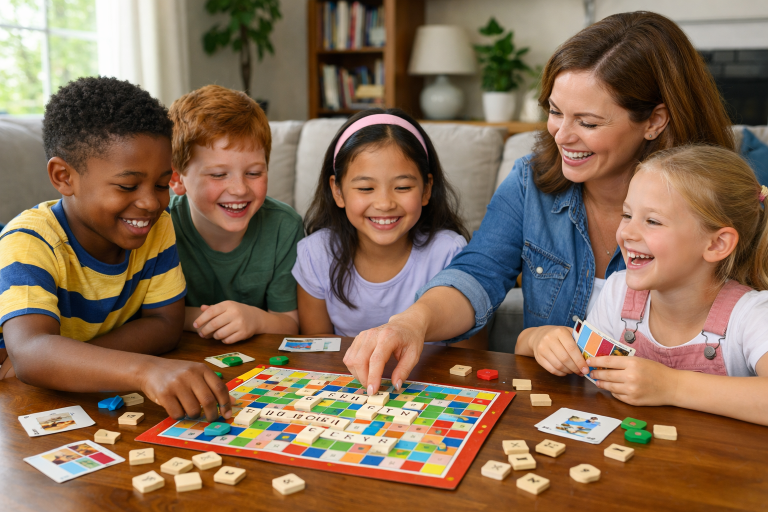
Many word games are naturally suited for group activities, providing children with valuable opportunities to develop essential social skills. Through interactions with siblings, classmates, friends, or adults, children practice important communication habits, including taking turns, listening carefully, expressing ideas, and responding constructively. These experiences help them understand cooperation, patience, and respect for others’ perspectives. Group word games also encourage teamwork as players share strategies, solve challenges together, and celebrate collective achievements. Over time, these activities can strengthen confidence, improve relationships, and help children become more effective collaborators in different social settings.
Examples of Effective Word Games
Several well-known word games offer rich opportunities for practicing language skills:
- Scrabble: Perfect for vocabulary growth, spelling practice, and critical thinking.
- Wordle: A daily game that challenges deduction, spelling, and patience.
- Boggle: Encourages rapid word formation and pattern recognition under timed conditions.
- Crossword Puzzles: Build vocabulary, foster reading comprehension, and enhance problem-solving skills.
For further exploration, The New York Times' Games section offers digital versions and tips for family-friendly game play.
Incorporating Word Games into Daily Routines
Integrating word games into children’s daily routines can create meaningful learning opportunities while keeping activities enjoyable and engaging. Setting aside dedicated time for a family game night, morning challenge, or afternoon vocabulary activity helps reinforce language skills beyond traditional classroom environments. These games can also serve as effective brain breaks during homework sessions, allowing children to recharge while continuing to develop critical thinking and communication abilities. For kids who enjoy technology, educational word game apps provide interactive ways to make screen time more beneficial. Consistent participation encourages stronger memory retention, expands vocabulary, improves problem-solving skills, and nurtures curiosity. Over time, these activities can inspire children to explore language with greater confidence and enthusiasm.
Conclusion
Word games serve as engaging learning tools that help children strengthen important reading and language skills while having fun. These activities encourage vocabulary growth, improve spelling accuracy, enhance comprehension, and develop critical thinking abilities through problem-solving and creative expression. By exploring new words and understanding language patterns, children become more confident communicators and more motivated learners. Incorporating word games into family activities or classroom routines creates opportunities for collaboration, curiosity, and continuous skill development. When used consistently, these games help build a strong foundation for literacy, supporting academic achievement and encouraging children to develop a lasting appreciation for language in both school and everyday life.


0 Comments