
Table of Contents
- Why Safety Comes First
- Make a Simple Plan Before Starting
- Check for Immediate Dangers
- Start With Essential Paths
- Use a Room-by-Room Reset
- Sort Items With Care
- Look for Hidden Damage
- Improve Air and Surface Conditions
- Know When to Call for Help
- Prevent a Return to Unsafe Conditions
Severe clutter can make a home hard to live in, but the first goal is not making every room look perfect. The real priority is making the space safer for the people who live there. Professional support for hoarding cleanup in San Francisco Bay Area can help when the amount of material, contamination, or safety risk feels too big to handle alone.
A safer home starts with small, clear changes. Opening a walkway, reaching a working bathroom, or clearing a door can improve daily life right away. Progress may feel slow at first, especially when belongings have piled up over many months or years. A calm pace and respectful choices can make the work easier to manage.
Why Safety Comes First
Clutter becomes more than a visual issue once it blocks exits, narrows walkways, covers appliances, or hides damage. Piles can create fall hazards, add fuel to a fire, trap moisture, and give pests a place to nest. They can also make it hard for emergency workers to reach someone who needs help.
Make a Simple Plan Before Starting
Write down one goal for the first day, such as clearing a hallway, reaching the electrical panel, or opening access to the shower. Choose a short work period, like one or two hours, and build in breaks for water and food. Set up separate spots for items to keep, donate, recycle, discard, or decide about later. Keep medication, legal papers, cash, and sentimental items in a protected area.
Check for Immediate Dangers
Before you move boxes or bags, look for hazards that need attention first. Check doors, windows, stairs, smoke alarms, and carbon monoxide alarms. Watch for exposed wires, overloaded outlets, broken glass, leaking pipes, spoiled food, strong odors, pest activity, or unstable stacks. Do not enter an area with sagging floors, bowed ceilings, or serious wall cracks just to save time.
If clutter has been touched by a burst pipe, roof leak, or flooding, deal with the moisture before you put items back in place. Services that handle water damage cleanup in Berkeley can help when wet materials, hidden moisture, or contaminated water make the situation unsafe.
Start With Essential Paths
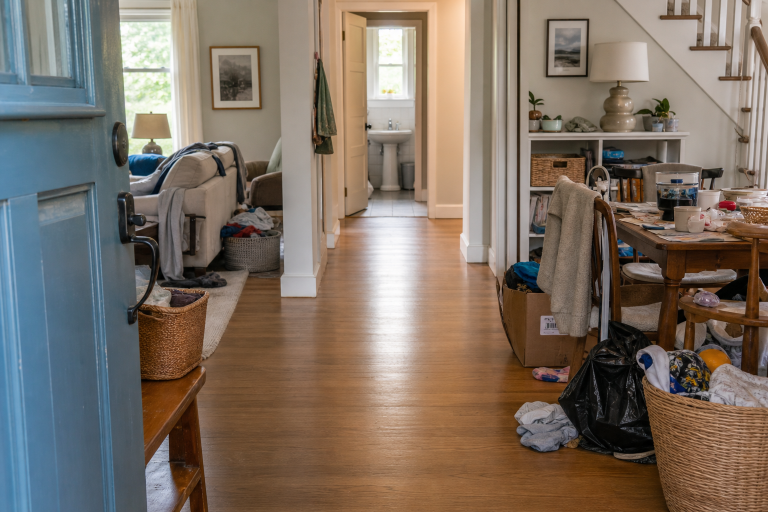
Focus on safe movement before you deep clean or organize. Clear a path from the main entrance to the bathroom, kitchen, sleeping area, and an outside exit. Work on one route at a time, and avoid setting filled bags where they block a doorway. Keep stairs free of loose objects, cords, and slippery items. Place a flashlight, phone charger, and emergency contact list somewhere you can reach easily.
Fire safety should guide these early choices. The U.S. Fire Administration notes that blocked doors and windows can delay escape and make it harder for firefighters to get inside. Its guidance on hoarding and fire safety also recommends keeping items that can burn away from cooking and heating equipment.
Use a Room-by-Room Reset
Entryways and Hallways
Clear doors, handles, steps, and walking surfaces. Remove loose rugs, cords, and anything that could shift underfoot. Keep these areas clear for the whole project, since they are your main escape routes.
Kitchen
Remove spoiled food, leaking containers, and damaged packaging. Restore access to the stove, sink, fridge, and electrical panel. Keep cleaning products away from food and medication. Check under sinks for leaks, soft cabinets, or signs of pests.
Bedrooms, Living Areas, and Bathrooms
Create a safe place to sleep, sit, bathe, and use the toilet. Keep lamps, heaters, and outlets clear of paper, clothing, and other materials. In bathrooms, look for mildew, weak flooring, poor airflow, and plumbing leaks. Store sharp objects and medications somewhere secure.
Garages, Basements, and Attics
Move slowly around heavy stacks, chemicals, and tools. Look for water intrusion, rust, insects, rodents, and damaged supports. Do not overload shelves or leave heavy items stored above rooms people use every day.
Sort Items With Care
A simple sorting system keeps you from making rushed choices and cuts down on conflict. Use clearly labeled containers or areas for each of these groups:
- Keep: Items that are used, needed, valuable, or deeply meaningful.
- Donate: Clean, safe belongings that could be useful to someone else.
- Recycle: Accepted paper, metal, electronics, and containers.
- Discard: Broken, spoiled, contaminated, or unsafe items.
- Decide later: A small group of items that need more thought.
Personal papers, photos, financial records, and prescription bottles need extra care. Shred sensitive papers before you throw them out, and follow local rules for medication and electronic waste.
Look for Hidden Damage
Once surfaces are visible, check them closely. Look for water stains, bubbling paint, warped wood, soft flooring, musty smells, insect activity, droppings, and damaged insulation. Take photos before repairs if you may need them for insurance, a landlord, or other property records. Fixing a leak quickly matters, since moisture problems tend to return if the source stays in place.
Improve Air and Surface Conditions
Wear gloves, closed-toe shoes, and eye protection when dust or splashes are likely. Use damp cloths or mops for regular dust instead of sweeping it into the air. Never mix cleaning products. Leave suspected mold, animal waste, needles, unknown powders, and hazardous chemicals for trained professionals. The EPA's mold cleanup guidance for homes stresses that controlling moisture and fixing water problems are key steps in keeping mold from coming back.
Know When to Call for Help
Some conditions need more than a careful cleanup. Call emergency services for an active fire, gas odor, medical emergency, or immediate threat. Call a licensed electrician for damaged wiring, and a qualified contractor for weak floors, stairs, ceilings, or walls. Get trained environmental help for major mold growth, sewage, chemicals, animal waste, or heavy pest activity. Mental health support can also make a real difference when working through what caused the clutter to build up.
Prevent a Return to Unsafe Conditions
Long-term safety comes from small routines. Spend ten minutes each week checking exits, stairs, appliances, and walkways. Handle mail on a regular schedule, repair leaks early, and set limits on what comes into the home and how much gets stored. Ask a trusted friend, family member, or support professional to help keep paths clear when you need it.
Final Thoughts
A safer home does not require perfection. One open exit, one usable room, and one finished task can be real progress. With a steady plan, careful sorting, and the right support, a difficult cleanup can turn into a safer, more livable fresh start.


0 Comments