
Table Of Contents
- Why Hair Health Deserves A Bigger View
- Common Causes Of Hair Thinning In Men
- How Stress Can Affect Hair Shedding
- Nutrition For Stronger Hair
- Simple Scalp Care Habits
- A Practical Daily Hair-Care Routine
- What To Know About Hair Supplements
- When To See A Dermatologist
- Hair Health Mistakes To Avoid
- Common Questions About Men's Hair Health
- Final Takeaway
Hair changes can be frustrating, especially when thinning, shedding, or scalp irritation seems to appear without a clear reason. Men's hair health is more than choosing the right shampoo. Genetics, age, stress, nutrition, illness, medications, grooming habits, and scalp conditions can all affect how hair looks and feels. For men exploring a broader approach to hair wellness, https://nutrafol.com/men/ offers information about men's hair health support.
It is also important to separate ordinary shedding from a meaningful change. Seeing a few hairs in the shower or on a brush is usually part of the normal hair cycle. A receding hairline, a widening part, increasing visibility of the scalp, or noticeably heavier shedding over several weeks deserves a closer look.
Why Hair Health Deserves A Bigger View
Hair grows in cycles, which means improvement rarely happens overnight. A consistent routine, realistic expectations, and attention to changes over time are more helpful than chasing quick fixes. Healthy-looking hair often reflects a combination of gentle care, adequate nutrition, stress management, and timely medical guidance when needed.
Common Causes Of Hair Thinning In Men
Male pattern hair loss is common and often related to family history, age, and hormone sensitivity. Still, it is not the only possible explanation. Thinning can also be connected to physical stress, emotional stress, rapid weight loss, a recent illness or surgery, nutrient deficiencies, medication side effects, thyroid concerns, or inflammatory scalp conditions.
- Family history of a receding hairline or crown thinning
- Low protein intake or possible nutrient deficiencies
- Recent illness, surgery, major weight changes, or poor sleep
- Dandruff, irritation, redness, or product buildup on the scalp
- Frequent heat styling, harsh chemical treatments, or tight hairstyles
The pattern and speed of loss can provide useful clues, but self-diagnosis has limits. Sudden shedding and persistent scalp symptoms should not automatically be blamed on genetics.
How Stress Can Affect Hair Shedding
Physical and emotional stress can disrupt the hair-growth cycle. In some cases, more follicles move into a resting phase, followed by increased shedding weeks or even months later. This delay can make the trigger hard to recognize. A demanding work period, a serious infection, poor sleep, or rapid weight loss may have occurred long before extra hair becomes noticeable.
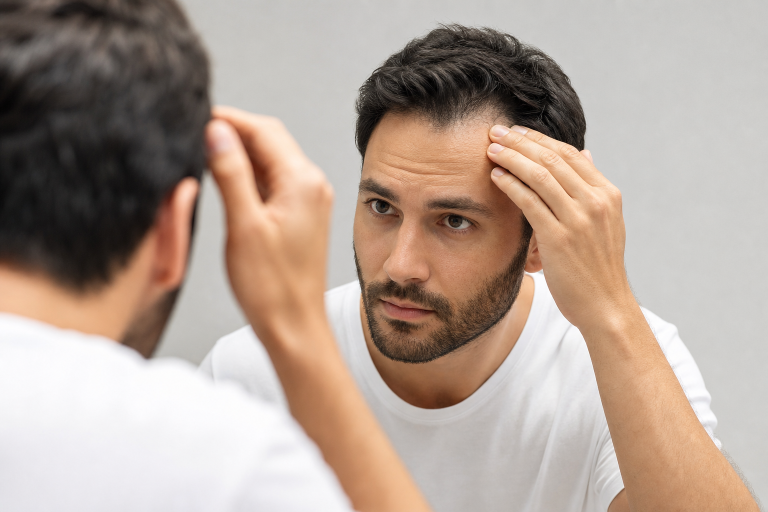
For a clearer explanation of stress-related shedding and the timing involved, see this dermatologist-backed overview of stress and hair loss.
Healthy Ways To Lower Daily Stress
- Keep sleep and wake times reasonably consistent.
- Build movement into the day through walks, workouts, or stretching.
- Use breathing exercises, meditation, or quiet breaks during stressful periods.
- Limit smoking and excessive alcohol use.
- Talk with a mental health professional if stress feels difficult to manage on your own.
Nutrition For Stronger Hair
Hair is largely protein-based, so an extremely restrictive diet can affect its appearance and growth cycle. No single food can reverse every kind of hair loss, but a balanced eating pattern gives the body the building blocks it needs for healthy hair and skin.
Key Foods To Include
- Protein: Eggs, fish, poultry, Greek yogurt, tofu, beans, and lentils.
- Iron-rich foods: Lean meats, beans, spinach, and fortified grains.
- Healthy fats: Nuts, seeds, olive oil, avocado, and fatty fish.
- Colorful produce: Leafy greens, berries, peppers, citrus, and sweet potatoes.
- Fluids: Water and low-sugar beverages throughout the day.
High-dose supplements are not a substitute for meals or medical evaluation. Taking extra vitamins or minerals without a demonstrated need can create side effects, interfere with medications, or add cost without addressing the actual cause of thinning.
Simple Scalp Care Habits
The scalp is skin, and it benefits from regular, gentle attention. Washing frequency should depend on sweat, oil, styling products, hair texture, and personal comfort. A clean scalp supports comfortable grooming, although shampoo alone cannot treat every type of hair loss.
- Wash with lukewarm rather than very hot water.
- Gently massage shampoo in with fingertips, not fingernails.
- Rinse thoroughly to prevent residue and buildup.
- Avoid picking at flakes, pimples, scabs, or irritated patches.
- Keep combs, brushes, hats, pillowcases, and clippers clean.
Persistent itching, painful bumps, sores, thick scaling, redness, or sharply defined bald patches may signal a condition that needs professional care.
A Practical Daily Hair-Care Routine
Morning
- Check for unusual flakes, redness, or irritation.
- Style hair without excessive pulling at the roots.
- Protect the exposed scalp from prolonged strong sun.
Evening
- Remove heavy styling products before bed when possible.
- Pat wet hair dry instead of rubbing it aggressively with a towel.
- Make a note if unusual shedding continues week after week.
Monthly Check-In
Take photos from the same angles and in similar lighting once a month. Compare the hairline, crown, part, and scalp over several months rather than judging progress from memory or checking every day.
What To Know About Hair Supplements
Supplements can be useful when a clinician identifies a deficiency, but they are not automatically safe or effective for everyone. Before buying one, review the full ingredient list, serving size, possible medication interactions, and quality-testing information. Be especially cautious of products that promise guaranteed regrowth or dramatic results in only a few weeks.
When To See A Dermatologist
A dermatologist can examine the scalp, review health history, and determine whether testing or treatment is appropriate. Consider making an appointment for rapid shedding, round bald patches, eyebrow or body hair loss, scalp pain, sores, heavy scaling, or thinning, combined with fatigue, weight changes, or other new symptoms. The American Academy of Dermatology's hair-loss guidance is a useful starting point for understanding safe self-care and treatment conversations.
Hair Health Mistakes To Avoid
- Waiting too long after sudden or patchy hair loss begins.
- Assuming stress is the only cause without considering other health factors.
- Using too many products and triggering buildup or irritation.
- Taking high-dose vitamins without testing or professional advice.
- Expecting results before the hair-growth cycle has time to respond.
Common Questions About Men's Hair Health
Does Washing Hair Cause Hair Loss?
Washing usually reveals hair that was already ready to shed. Harsh scrubbing, irritating products, and very hot water can still damage the hair shaft or aggravate the scalp.
Can Stress-Related Shedding Grow Back?
Some stress-related shedding improves after the underlying trigger is addressed. The timeline varies, so a professional evaluation can help rule out other causes.
Are Hair Vitamins Worth Taking?
They may be helpful when a real deficiency is present. Without one, extra doses may provide little benefit and can sometimes introduce unnecessary risks.
Final Takeaway
Better hair health starts with steady habits: eat balanced meals, manage stress, treat the scalp gently, avoid harsh grooming practices, and track meaningful changes over time. When shedding is sudden, persistent, or accompanied by scalp symptoms, seeking qualified medical advice is often the most productive next step.


0 Comments