Key Takeaways
- Inspect outdoor plumbing in early fall before freezing weather arrives.
- Watch for dripping faucets, wet soil, low pressure, or unexplained water use.
- Use a water-meter check to screen for possible hidden leaks.
- Disconnect and drain garden hoses before freezing temperatures.
- Protect accessible pipes and valves in unheated areas.
- Winterize irrigation systems and outdoor water lines as needed.
- Avoid open flames when dealing with frozen pipes.
- Shut off the main water supply if a pipe bursts.
- Seek professional help for hidden, buried, or difficult-to-access leaks.
- Complete winter preparation before the first freeze.
Chicago homeowners know that a small outdoor plumbing concern can become much more disruptive once freezing weather arrives. From brick bungalows with hose connections at the rear of the house to two-flats with exposed basement piping, a fall inspection helps identify trouble before water freezes inside a vulnerable line. If you notice wet soil, a stubborn drip, or unexplained water use, speaking with a leak detection plumber in Chicago can help determine whether the issue is at a fixture, beneath the yard, or near the home's water service. The goal is not to overhaul every pipe before winter. It is to remove trapped water, protect exposed components, confirm that shutoff valves work, and address warning signs early. That preparation matters in Chicago, where an outdoor faucet, irrigation connection, or pipe in an unheated garage can be exposed to cold air long before a homeowner notices a problem.
Why a Fall Plumbing Check Matters in Chicago
Water expands when it freezes. If water remains in a hose, faucet body, irrigation fitting, or a short pipe section near an exterior wall, the resulting expansion can damage the plumbing. Freeze damage is not always obvious immediately. A split pipe or fitting may only reveal itself after temperatures rise and water begins moving through the line again. Fall is also a practical time to investigate damp areas around a Chicago property. A persistent wet spot beside a foundation, softened soil near a parkway-side service route, or a patch of grass that stays unusually green can indicate a leak. It can also result from drainage, grading, or irrigation overspray, so the source should be confirmed before anyone digs.
Early Warning Signs of Outdoor Plumbing Trouble
One symptom does not always identify the cause, but several signs together warrant attention. Walk the exterior of the home, including side yards, garages, decks, and the area around outdoor spigots.
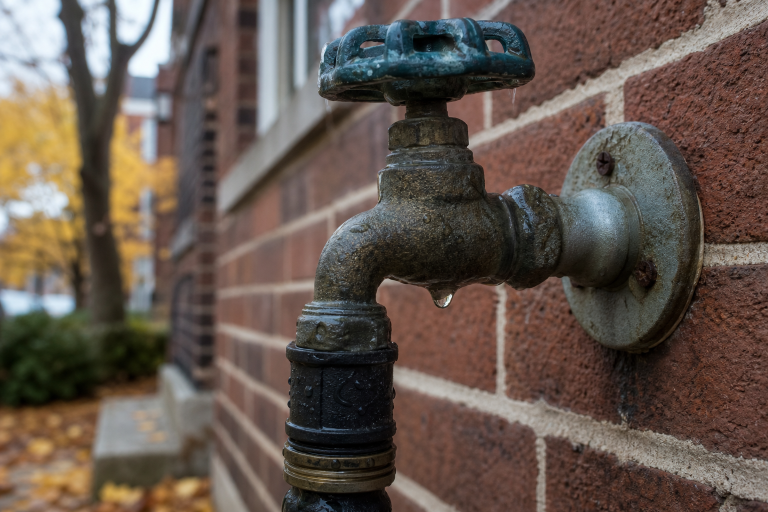
- A faucet drips after the handle is fully closed.
- Water leaks from the wall area behind a hose bib.
- Soil remains wet during a dry period.
- Water pressure seems lower at multiple fixtures.
- Pavement or soil settles near a suspected water-line route.
- The water meter shows usage when no water is intentionally running.
How to Check for Hidden Water Leaks
A meter test is a useful screening step for a possible leak. Turn off faucets, appliances, irrigation equipment, and other known water uses. Record the meter reading, wait 15 to 30 minutes without using water, then check it again. Movement can indicate that water is flowing somewhere on the property, although it does not identify the exact location.
- Make sure toilets are not refilling, and fixtures are off.
- Record the meter position or leak indicator.
- Wait without running water.
- Check whether the reading or indicator has changed.
- If necessary, shut off the home's main valve and repeat the test to help narrow down the issue.
For Chicago account holders facing qualifying high usage from outdoor or underground leaks, the city's leak relief program describes potential billing assistance and account requirements.
Prepare Outdoor Faucets and Hose Bibs
Disconnect every garden hose before freezing conditions develop. Drain the hose and store it in a sheltered place. Leaving it attached can hold water in the faucet and the connected pipe, even when the faucet is turned off. University of Illinois Extension advises homeowners to remove and drain hoses from outdoor spigots as part of winter preparation. Inspect each faucet for corrosion, cracks, loose mounting, and dripping. If the home has an indoor shutoff for the outdoor faucet, close it and drain the exterior fixture according to the plumbing setup. Frost-resistant faucets reduce risk when properly installed, but they are not invulnerable, especially when a hose remains connected or the fixture is damaged.
Protect Exposed Pipes and Valves
Pay close attention to pipes in unheated garages, crawl spaces, unfinished basements, utility rooms, and exterior-wall cavities. Foam pipe insulation can slow heat loss around accessible piping, while sealing obvious drafts can reduce exposure to cold air. Insulation is preventive support, not a repair for a leak, failed valve, or pipe that cannot drain. Heat tape may be appropriate for certain accessible pipes if it is listed for the intended use and installed exactly as directed by its manufacturer. Never use a torch, open flame, or other uncontrolled heat source to thaw or warm plumbing.
Winterize Irrigation and Buried Water Lines
Chicago homes with garden irrigation, drip systems, outdoor sinks, pool lines, or backflow devices need a separate winterization plan. Locate the shutoff first, then drain the system or arrange a professional blowout when the equipment manufacturer or system design calls for one. Marking valves before leaves, snow, or stored outdoor items makes them difficult to find.
- Shut off the irrigation water supply.
- Drain accessible lines and above-ground components as appropriate.
- Inspect backflow devices and fittings for visible damage.
- Look for erosion or recurring wet soil near buried connections.
- Avoid digging until the leak source and utility locations are understood.
DIY Checks or Professional Help?
Reasonable DIY Tasks
Homeowners can usually disconnect hoses, inspect visible faucets, verify that accessible insulation is intact, locate shutoff valves, and perform a basic meter test. Do not force a valve handle that is seized or heavily corroded, because it may break or begin leaking.
When Professional Help Makes Sense
Professional evaluation is appropriate when the meter moves with all fixtures off, water is surfacing from the ground, pressure drops throughout the home, or a leak may be hidden behind a wall. Buried service-line concerns, excavation, and complex irrigation repairs also require careful diagnosis before work begins.
What to Do if a Pipe Freezes or Bursts
- Shut off the main water supply if water is escaping.
- Open a nearby faucet to relieve pressure.
- Keep away from standing water near electrical equipment.
- Do not use an open flame to thaw the pipe.
- Arrange repair help if the frozen or damaged section is hidden or inaccessible.
- After thawing, inspect for leaks before returning the plumbing to normal use.
Build a Seasonal Maintenance Plan
Early Fall
- Inspect outdoor faucets, pipes, and visible valves.
- Perform a water-meter check if usage seems unusual.
- Test the main shutoff gently.
- Schedule irrigation winterization if needed.
Before the First Freeze
- Disconnect and drain all hoses.
- Shut off and drain outdoor fixtures where possible.
- Protect accessible exposed pipes.
- Confirm that indoor heat will remain on.
Frequently Asked Questions
When should outdoor plumbing be winterized in Chicago?
Begin inspections in early fall and complete draining and protection work before freezing temperatures are expected. The right timing depends on the property, its plumbing layout, and the forecast.
Can a dripping outdoor faucet freeze?
Yes. A drip can signal a worn component or water trapped where it should drain. Repairing it before cold weather is safer than waiting for a harder freeze.
Does pipe insulation prevent every frozen-pipe problem?
No. Insulation slows heat loss, but it cannot correct a damaged faucet, a failed shutoff, poor drainage, or prolonged exposure to severe cold.
How can I tell whether a yard leak is underground?
A moving meter, persistently wet soil, unexplained low pressure, or water surfacing away from fixtures can indicate a buried leak. Diagnosis is important before excavation.
Final Takeaway
Outdoor plumbing maintenance is one of the simplest ways Chicago homeowners can prepare for the cold season. A focused fall walk-through can help identify leaking faucets, damaged hose connections, standing water, or exposed pipes that may need attention before temperatures drop. Homeowners should also check the water meter for unusual activity, disconnect and drain garden hoses, protect exposed plumbing where appropriate, and address small leaks before they become more difficult to manage in freezing conditions. Outdoor fixtures, irrigation components, and other water connections should be reviewed based on their specific setup and seasonal requirements. Taking these steps before the first freeze can help reduce avoidable plumbing problems and protect the home's water service, yard, and outdoor fixtures throughout the colder months.


0 Comments