
Key Takeaways
- Brief movement breaks can reduce the strain associated with staying in one position for too long.
- There is no single ideal posture for an entire day. Frequent position changes matter.
- Gentle strength work can support the muscles around the spine, hips, and shoulders.
- Planning how you lift and carry can reduce avoidable muscle strain.
- Persistent pain, numbness, weakness, or symptoms that travel into an arm or leg deserve professional evaluation.
Back and neck comfort is often shaped by ordinary routines, including how long you sit, how often you move, how you lift, and how you recover after a busy day. Small adjustments can add up without requiring an extreme fitness plan. For people seeking individualized guidance for ongoing musculoskeletal concerns, Taylor Family Chiropractic may be a place to discuss appropriate next steps with a qualified professional. The goal is not to achieve a rigid, "perfect" posture or eliminate every ache. Bodies are built to move, and most people benefit more from changing positions regularly, building manageable strength, and responding early when a task or setup creates repeated strain.
Why Daily Habits Matter
Back and neck symptoms rarely come from only one source. Long stretches of sitting, low activity, rushed lifting, poor sleep, stress, and a sudden increase in physical work can all contribute. That does not mean every sore muscle signals a serious problem. It does mean that repeated habits are worth noticing. Think of daily care as creating more opportunities for comfortable movement. A few practical changes may support mobility and reduce irritation over time, but they cannot prevent every injury or replace a clinical evaluation when symptoms continue.
Start With More Movement, Not More Effort
A realistic movement habit is usually more useful than an ambitious plan that disappears after a week. Start by interrupting long periods of stillness. Walk while taking a phone call, stand for a short task, refill your water, or take a lap through the hallway before returning to work.
- Set a reminder every 30 to 60 minutes.
- Stand and move for two to five minutes.
- Change positions before stiffness becomes distracting.
- Choose activities that feel easy enough to repeat tomorrow.
Evidence summarized in research on exercise for preventing back and neck problems suggests that active exercise approaches have shown more promise than passive supports alone. The best choice is usually the movement you can do consistently and safely.
Build A Spine-Friendly Workstation
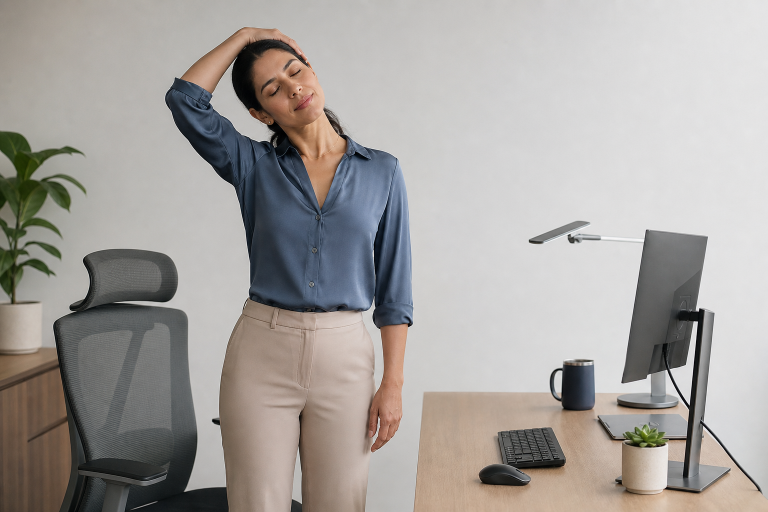
A comfortable workstation should make neutral, relaxed positions easier rather than force you to hold still. Arrange your workspace so common tasks stay close to your body and you can shift between sitting, standing, and walking throughout the day.
- Place the monitor near eye level and directly in front of you.
- Keep your feet supported by the floor or a footrest.
- Use lower-back support that feels comfortable rather than overly rigid.
- Keep the keyboard and mouse close enough to avoid reaching forward.
- Relax the shoulders instead of holding them raised while typing.
- Alternate positions when your work setup allows it.
Detailed guidance on arranging a computer workstation can help you fine-tune monitor height, chair position, and input device placement. Even a well-arranged desk works best when paired with regular breaks.
Use Gentle Strength Work
Every day strength can make routine tasks feel more manageable. The hips, legs, shoulders, and trunk all help you get up from a chair, carry groceries, climb stairs, and reach overhead. Strength work is not a cure for pain, but it can be a useful part of an overall movement routine.
Simple movements to consider
- Chair stands to build leg strength.
- Wall push-ups for the chest and shoulders.
- Glute bridges for the hips and back of the legs.
- Bird-dog movements for balance and trunk control.
- Light resistance-band rows for the upper back.
Use slow, controlled repetitions and begin with a volume that feels manageable. Stop and seek advice if an activity causes sharp pain, new numbness, weakness, or symptoms that travel down an arm or leg.
Improve Lifting And Carrying Habits
Safer lifting begins before the object leaves the floor. Check whether the item is too heavy, bulky, or awkward for one person to handle. Then reduce the distance between your body and the load, bend through the hips and knees, and keep the item close as you stand.
- Test the weight before committing to the lift.
- Move close to the object and clear the path.
- Bend at the hips and knees rather than reaching from the waist.
- Lift smoothly while keeping the load close.
- Turn by moving your feet instead of twisting through the back.
- Ask for help with heavy or uneven loads.
For example, someone carrying a full box may feel a sudden pull while turning toward a doorway. Setting the box down first, repositioning the feet, and getting help for the next lift is usually smarter than trying to force the turn while holding the weight.
Make Phone And Screen Time Easier On The Neck
Looking down at a phone for a long time can leave the neck and upper back feeling tired. Technology is not the enemy, but your position and duration matter. Raise the phone closer to eye level, support your arms on a pillow or armrest, switch hands, and take brief visual breaks. For long messages, voice dictation can reduce sustained screen time. When reading or scrolling, change position occasionally rather than enduring discomfort until you finish.
Support Recovery Through Sleep And Stress Control
Sleep and stress can influence energy, muscle tension, and how strongly pain is felt. There is no universal sleep position that works for everyone, so use comfort as your guide. Side sleepers may prefer a pillow between the knees, while back sleepers may find a pillow under the knees helpful. A brief wind-down routine can also help. Dim screens, take a short walk, practice calm breathing, or do gentle mobility work if it feels good. The aim is not perfection but a repeatable transition from a demanding day.
Know When Self-Care Is Not Enough
Home strategies are appropriate only for mild symptoms that improve. Seek professional advice for pain that lasts or repeatedly returns, numbness, tingling, weakness, or pain that travels into an arm or leg. Prompt medical attention is important after a significant fall, crash, or major injury. Loss of bladder or bowel control, sudden severe pain, chest pain, or trouble breathing requires urgent medical attention. A general stretching or exercise routine should never delay care for warning signs.
A Simple Seven-Day Starter Plan
- Day One: Take three short walking breaks.
- Day Two: Adjust your monitor, chair, keyboard, and mouse.
- Day Three: Try five minutes of gentle mobility.
- Day Four: Practice lifting a light object with controlled form.
- Day Five: Add a short strength session.
- Day Six: Reduce extended phone use and change positions often.
- Day Seven: Keep the habits that felt easiest and most helpful.
Conclusion
Supporting your back and neck does not require a major lifestyle overhaul. Regular movement, sensible workstation choices, controlled lifting, gentle strength work, and timely attention to warning signs can form a practical foundation for daily comfort. Simple habits, such as changing positions throughout the day, maintaining comfortable posture, taking short movement breaks, and using appropriate support while sitting or sleeping, can also help reduce unnecessary strain. The goal is not to maintain a perfect posture at all times, but to build consistent routines that encourage movement and reduce prolonged stress on the same areas. When persistent or worsening discomfort interferes with normal activities, seeking guidance from an appropriate healthcare professional can help identify the right next steps.


0 Comments