
Key Takeaways
- Evaluate location and property condition carefully.
- Review permits, renovation history, and historic restrictions.
- Check maintenance, insurance, and ownership costs.
- Compare properties based on long-term value and resale potential.
- Use qualified professionals during due diligence.
A beautiful Los Angeles home can create an instant emotional pull. A view, a dramatic entry, original architectural details, or a resort-style yard may all make a property feel exceptional. Still, a luxury price does not eliminate ordinary ownership risks. It simply raises the cost of overlooking them.
For a neighborhood-level perspective, Beverly Hills real estate expert Peter Mac represents luxury buyers and sellers through a Beverly Hills-based practice that features Los Angeles property searches and listings. Peter Mac's background includes high-end investment properties, and his service areas include Beverly Hills, Hancock Park, Sherman Oaks, Studio City, West Hollywood, and nearby communities. That local range matters when buyers are comparing homes with very different settings, histories, and long-term appeal.
Start With the Location, Not the Listing Photos
Visit the property more than once, ideally at different times of day. Stand outside with the windows open. Notice traffic, construction activity, aircraft noise, street parking, delivery access, privacy from neighboring homes, and the route in and out of the area.
Then match the setting to daily life. A canyon home, a flat-lot Beverly Hills residence, and an older Hancock Park estate can sit in the same broad luxury price range while offering entirely different access, maintenance needs, and buyer pools. Consider commutes, schools, shopping, dining, major roads, and airport access, as well as whether guests, household staff, and service providers can use the property comfortably.
Check the Property's History
Request the available sale history, listing history, disclosures, renovation information, and records for major work. Ask whether the house was remodeled, expanded, substantially rebuilt, or converted from another use. Earlier listing photos can sometimes help a buyer understand what changed and whether the current layout reflects a cohesive plan.
Focus on changes that can affect both performance and appearance. A new primary suite, lower-level conversion, pool, garage conversion, retaining wall, or addition may alter drainage patterns, structural loads, utility needs, and future resale questions.
Review Permits and Renovation Work
Do not treat a polished renovation as proof that every improvement was properly documented. Confirm permits and final approvals for substantial additions, accessory structures, pools, guesthouses, retaining walls, electrical upgrades, plumbing work, and converted spaces. Ask the seller for contractor information, warranties, plans, and inspection records when they are available.
Unpermitted work can complicate insurance, financing, negotiations, and later resale. It may also leave a future owner responsible for corrections. A general home inspection is important, but it is not designed to answer every technical question. Bring in specialists when the property's age, design, or condition calls for deeper review.
Look Closely at Hillside and Older-Home Risks
Los Angeles includes hillside, canyon, coastal, and older established neighborhoods, each with issues that deserve property-specific attention. On sloped sites, examine drainage routes, retaining walls, hillside access, mature trees, exterior stairways, and evidence of water intrusion. Ask direct questions about prior movement, repairs, leaks, and drainage improvements.
For an older residence, pay close attention to the foundation, roof, sewer line, electrical system, plumbing, windows, and exterior materials. Depending on the home, a structural engineer, geotechnical professional, roofer, or sewer specialist may provide a more useful answer than a visual walk-through alone. "Move-in ready" describes presentation, not necessarily long-term condition.
Understand Historic Designations and Renovation Rules
Before planning exterior changes, determine whether the property is within a Historic Preservation Overlay Zone (HPOZ). The City's Los Angeles HPOZ guidelines state that exterior work, including alterations, additions, new construction, and landscaping, may be subject to additional review within these local historic districts.
This does not mean a buyer cannot improve the home. It means the scope, materials, design, and review process should be understood before the purchase is final. Confirm the district status, applicable preservation plan, and likely approval path before assuming that a new façade, replacement windows, expanded garage, or major addition can proceed on a preferred timeline.
Protect the Home's Original Character
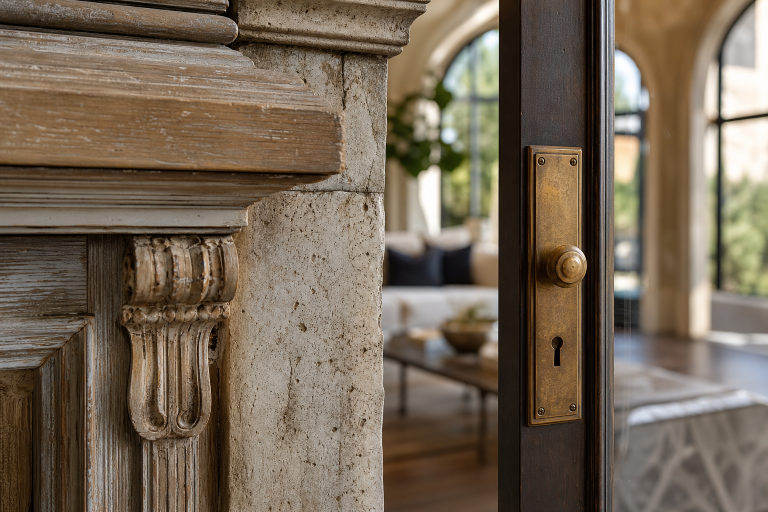
Original windows, doors, hardware, millwork, stonework, light fixtures, and room proportions can be part of what makes an older luxury home desirable. Replacing distinctive elements without a clear plan can weaken the character that attracted buyers in the first place.
When rehabilitation is appropriate, the Secretary of the Interior's rehabilitation standards offer a useful framework for retaining historic character while accommodating compatible repairs and additions. Those standards are a general preservation reference, not a substitute for local approvals, architectural advice, or legal guidance.
Calculate the Full Cost of Ownership
The purchase price is only the starting point. Build a realistic annual ownership budget before making an offer, including:
- Property taxes and any applicable homeowners' association dues.
- Homeowners, earthquake, flood, or other insurance may be appropriate for the property.
- Utilities, landscaping, tree care, pool service, security, and smart-home subscriptions.
- Routine maintenance for roofs, mechanical systems, gates, hardscape, and exterior finishes.
- A reserve for future repairs and replacements.
Luxury homes often have more complex systems, larger grounds, specialty finishes, and higher replacement values. An insurance professional and tax advisor can help a buyer estimate costs based on the individual property and ownership structure.
Compare the Home With the Right Properties
Square footage is only one comparison point. A useful review weighs lot size, usable outdoor space, street position, views, privacy, parking, guest access, architectural quality, renovation level, permit history, and recent closed sales with similar attributes.
For example, a smaller home with a functional floor plan, documented improvements, strong privacy, and well-maintained original details may appeal to more future buyers than a larger house with awkward additions or unresolved permit questions. The goal is not to find an identical sale. It is to understand why buyers may value one property more than another.
Consider Resale Before Making an Offer
Ask who is likely to buy the property in five or ten years. Consider bedroom placement, kitchen and living-area flow, parking, outdoor usability, privacy, and the relationship between the home and its lot. Distinctive architecture can be a major advantage, but highly customized finishes or a difficult layout may narrow the future audience.
Build the Right Review Team
Use professionals whose expertise matches the home. A strong review team may include a buyer's real estate representative, a licensed home inspector, a structural engineer, a contractor or architect, an insurance professional, a tax advisor, and, when appropriate, a land-use or historic-preservation consultant. Each addresses a different question, so no single inspection should be expected to cover every risk.
Buy the Property, Not Just the Presentation
A luxury home should feel special, but it should also hold up under careful review. Buyers who examine the location, condition, documentation, ownership costs, and resale outlook are better positioned to make a confident decision. In Los Angeles, California, the strongest purchase is rarely just the most dramatic home. It is the one whose beauty and long-term practicality support each other.


0 Comments