Key Takeaways
- Pick a beach with adequate open space, convenient access, restrooms, and rules that allow your planned activities.
- Offer a mix of active, relaxed, competitive, and all-ages games so more guests can participate.
- Make shade, drinking water, sunscreen reminders, and rest breaks part of the schedule.
- Check weather, tide, surf, and beach conditions before guests arrive.
- Keep the schedule flexible, and leave the beach cleaner than you found it.
A beach game day can be as simple as a few friends, snacks, shade, and a handful of easy activities. The setting gives guests room to move, relax, talk, swim when conditions permit, or sit out a round without feeling excluded. The best gatherings do not need a rigid tournament structure. They need thoughtful planning that makes the day comfortable and easy to enjoy.
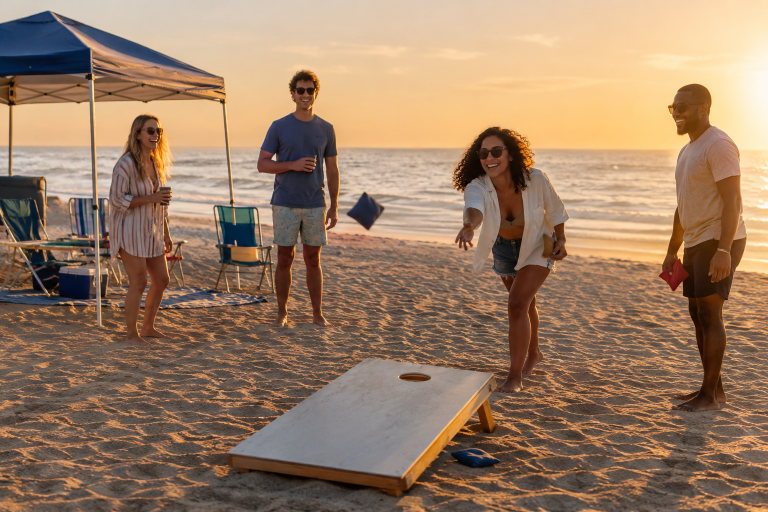
Start with games that are simple to set up and easy to explain. The portable https://www.cornholeworldwide.com/shop/beach-cornhole-games/ collection can be a practical option for a casual toss-game station, while a soft ball, cones, buckets, and a frisbee can support several other activities without overpacking.
Why Beach Game Days Work So Well
Beaches naturally support a flexible group event. Open sand makes it easier to create separate areas for games, food, and relaxing. Short rounds also work well because guests can join between conversations, take breaks in the shade, or switch activities without disrupting everyone else. For groups with mixed ages or energy levels, that freedom is often more enjoyable than asking everyone to commit to one long game.
A good beach game day also creates low-pressure ways for people to meet. Team relays, tossing games, trivia, and scavenger-style challenges give guests something to do together, even if they have not met before. Keep the emphasis on participation and laughter rather than strict competition.
Choose the Right Beach and Time
Visit or research the location before sending invitations. A beach that looks wide in photos may have limited usable sand at high tide, a long walk from parking, or restrictions on tents, amplified music, balls, or organized gatherings. Confirm opening hours, parking arrangements, restroom access, and whether the beach has lifeguards during your event.
Questions to Ask Before You Commit
- Will there be enough dry, open sand for the planned group size?
- Are games, shade canopies, and coolers permitted?
- How far is the walk from the parking to the sand?
- Will high tide reduce the activity area?
- Is there a nearby park, pavilion, or indoor option if conditions change?
Morning and late-afternoon events can be more comfortable than midday gatherings, especially during warm weather. They may also provide more space before the beach becomes crowded. Share a clear meeting point, arrival time, and a note about parking so guests do not have to search for the group after they arrive.
Build a Balanced Game Plan
Choose several short activities rather than relying on a single main event. This gives guests choices and prevents a single game from dominating the day. Plan games around the group’s ages, mobility needs, comfort with competition, and the amount of clear sand available.
Game Categories to Include
- Quick-start games: Frisbee tosses, beach bingo, or simple scavenger challenges that need little instruction.
- Team games: Relay races, softball passing games, and cooperative sandcastle challenges.
- Skill games: Beanbag tosses, ring tosses, target throws, or balancing challenges.
- Low-energy games: Trivia, cards, drawing prompts, and guessing games under the shade.
- All-ages games: Activities with adjustable distances, simplified rules, and optional nonplaying roles.
Use soft equipment whenever possible, and avoid games that send objects toward other beachgoers. Mark the play area with brightly colored towels or cones, leaving clear paths around it for people walking along the shore.
Use a Simple Event Schedule
A loose schedule helps the host handle setup, breaks, and cleanup without making the gathering feel overmanaged. Think of it as a sequence rather than a strict timetable.
- Arrival and setup: Put up shade, organize water and snacks, and define the game area.
- Welcome round: Point out restrooms, introduce the plan, and share basic safety reminders.
- Short opening games: Begin with activities anyone can enter quickly.
- Water and food break: Encourage everyone to cool down and reapply sunscreen if needed.
- Main group activity: Run the game the group is most excited about.
- Free-play period: Let guests choose between games, conversation, or quiet beach time.
- Final round and cleanup: End with a casual challenge, then pack up together.
Pack for Comfort, Not Just Games
Sand, wind, sun, and saltwater can make a simple outing harder if the essentials are missing. Bring drinking water, reusable cups, towels, hats, sunglasses, a first-aid kit, trash bags, and containers for small game pieces. A cooler can help keep perishable food cold, while zippered bags are useful for phones, keys, and cards.
Shade deserves priority. The CDC notes that ultraviolet rays can reach people on cloudy days and be reflected off water and sand, so a shaded rest area should be available even when the forecast looks mild. Bring umbrellas, a canopy if permitted, or another reliable shelter, along with sunscreen and light cover-ups. Protecting skin from the sun also includes taking breaks and reapplying sunscreen after swimming, sweating, or toweling off.
Keep Water Activities Safe
Water activities should always be optional, and they should follow the conditions at that specific beach. Check posted notices, speak with lifeguards when present, and keep children within arm’s reach near the water. Do not assume calm-looking water is safe, and do not ask inexperienced swimmers to participate beyond their comfort level.
Before anyone enters the surf, review local beach conditions and rip-current safety guidance. Swim near lifeguards when possible, avoid swimming alone, and follow all posted warnings. If a person is caught in a rip current, they should avoid fighting it directly, try to move parallel to the shore or toward breaking waves if able, and signal for help if they cannot return safely.
Make the Day Fair and Welcoming
Small adjustments make a large difference. Rotate teams between rounds, let beginners practice before scoring begins, and shorten throwing distances for children or guests who prefer them. Offer alternatives such as scorekeeper, photographer, playlist manager, or sandcastle judge so nobody feels pressured to play every game.
Reward teamwork, creativity, and good sportsmanship rather than focusing solely on winners. A lighthearted prize, such as first choice of snacks or a handmade “beach champion” sign, can keep the mood fun without raising the stakes.
Handle Food, Drinks, and Waste
Choose foods that are easy to serve and protect from heat, such as fruit, sandwiches kept in a cooler, snack bars, and chilled water. Keep raw foods separate from ready-to-eat items, provide hand sanitizer or a portable hand-washing option, and label foods containing common allergens when sharing with a group.
Finish with a five-minute cleanup sweep. Assign a few people to check the game area, food area, and nearby sand for wrappers, bottle caps, utensils, and small pieces of equipment. Taking everything back with you protects wildlife, respects other visitors, and makes the next beach day easier to enjoy.
Final Thoughts
A memorable beach game day does not require expensive gear or an hour-by-hour itinerary. Choose a suitable location, bring activities that fit the group, prepare for heat and changing conditions, and build in time to rest. When comfort, safety, and flexibility lead the plan, guests can focus on what matters most: having a genuinely good day together.


0 Comments