
Key Takeaways
- After a motorcycle collision, medical care and personal safety take precedence over evidence collection.
- Photographs, witness details, police records, damaged gear, and medical notes can help preserve an accurate account.
- Legal representation can help injured riders understand insurance communications, preserve evidence, and organize records.
- Expenses, missed work, treatment, and daily limitations should be documented from the beginning.
- Nevada laws and insurance policies can affect a case, so individualized guidance may be important.
Legal representation in Las Vegas can be especially valuable after a motorcycle crash, when an injured rider may be managing pain, vehicle damage, insurance calls, and uncertainty about what happens next. A conversation with Steve Dimopoulos Law may help a rider or family understand the practical steps involved in protecting records and addressing a potential claim.
Good legal support does not begin with dramatic statements about fault or compensation. It begins with careful documentation, clear communication, and attention to detail that can quickly disappear after a collision. The following steps can help create a more complete record while keeping health and safety at the center of the process.
Why a Clear Crash Record Matters
A crash scene can change in minutes. Vehicles may be moved, debris may be cleared, road conditions may change, and witnesses may leave before anyone records their contact information. Pain, shock, medication, and head injuries can also make it difficult to remember the sequence of events later.
A complete file gives legal representatives a stronger starting point for reviewing what happened. Motorcycle crashes can involve visibility issues, turning vehicles, road defects, commercial drivers, rideshare activity, or disputed versions of events. Federal motorcycle safety information also emphasizes the unique risks riders face on the road, including the importance of visibility and protective equipment.
Step One: Protect People Before Protecting Evidence
- Move out of traffic only when it is safe to do so.
- Call 911 and request emergency assistance.
- Avoid moving an injured person or removing a helmet unless immediate danger requires it.
- Tell responders about head impact, dizziness, numbness, confusion, chest pain, or loss of consciousness.
- Seek medical attention even if symptoms initially seem minor.
No photograph, video, or document is worth risking a second injury. If the rider cannot gather information, a passenger, friend, family member, witness, or later investigation may still provide useful evidence.
Step Two: Photograph the Scene Safely
When emergency needs have been addressed and it is safe to do so, photographs can preserve details that may not be clearly captured in a police report. Take wide images to show the full roadway, medium images to show vehicle placement, and close-up images for damage and physical evidence.
Details Worth Capturing
- Vehicle positions, license plates, and visible damage.
- Intersections, lane markings, traffic lights, signs, and road signals.
- Skid marks, gouges, broken glass, fluids, and scattered motorcycle parts.
- Weather, lighting, shadows, construction, potholes, and obstructed sightlines.
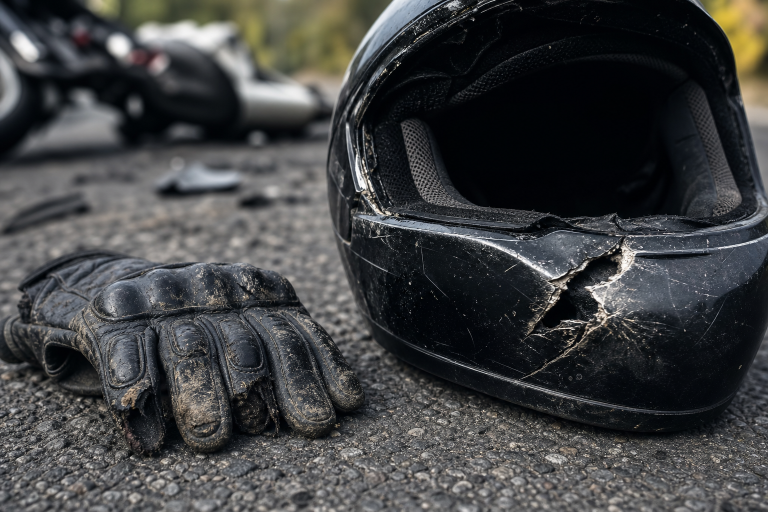
- Damage to the motorcycle, helmet, jacket, gloves, boots, and other gear.
Keep original image files whenever possible. Filters, edits, screenshots, and repeated forwarding can remove useful information or create unnecessary questions about when and how an image was made.
Step Three: Gather Witness and Driver Information
Exchange names, insurance details, driver's license information, vehicle registration details, and plate numbers with the other driver. Note whether that person appeared to be working, making a delivery, driving a company vehicle, or transporting rideshare passengers. Those facts may affect which insurance policies or parties need to be reviewed.
Witnesses can be important because they may have seen events from a different angle. For example, a person near a driveway may have seen a turning vehicle that the rider could not see. Ask for names and reliable contact information, and write down what each witness says without suggesting answers or arguing about fault.
Step Four: Preserve the Helmet and Riding Gear
Damaged riding gear can provide useful information about impact points, road contact, and the force of a crash. Do not wash, repair, sell, or discard the helmet, jacket, gloves, boots, pants, or protective equipment before documenting their condition.
- Photograph every item from multiple angles.
- Capture tears, scuffs, paint transfer, broken straps, labels, and certification markings.
- Store items separately in a clean, dry location.
- Keep purchase receipts or proof of ownership when available.
A helmet involved in a collision may need replacement even if the damage is not obvious. Riders should follow manufacturer guidance and seek qualified safety advice rather than relying on a visual inspection alone.
Step Five: Build a Medical Timeline
Save emergency records, imaging reports, prescriptions, referrals, discharge instructions, therapy notes, and follow-up records. Symptoms can change over time, particularly after head, neck, back, or nerve injuries. A dated journal can help record headaches, poor sleep, weakness, tingling, mobility limits, missed activities, and changes in pain.
Consistent medical documentation helps show the progression of recovery and gives a legal representative clearer information to evaluate. Follow treatment instructions, attend appointments when possible, and report new or worsening symptoms promptly.
Step Six: Track Costs, Work Losses, and Daily Limits
A serious crash can create losses beyond emergency medical bills. Keep receipts and records for prescriptions, therapy, medical equipment, transportation, parking, towing, storage, repair estimates, motorcycle replacement costs, and household help.
Also save pay stubs, missed-shift records, employer communications, and tax documents that may show lost income. A simple spreadsheet or digital folder can list each expense by date, amount, purpose, and related receipt.
Step Seven: Preserve Digital Evidence
Save helmet-camera footage, dash-camera video, call logs, texts, location data, and rideshare records in their original form. Nearby businesses, homes, and traffic systems may have video, but many recording systems overwrite footage quickly. A prompt request to preserve relevant video can make a difference.
Use care with social media. Posts about fault, physical activity, settlement discussions, or recovery can be misunderstood without context. It is generally wiser to keep crash-related details private until the matter is resolved.
Step Eight: Handle Insurance Calls with Care
Report the collision as required by the applicable insurance policy, provide accurate basic facts, and keep claim numbers, emails, letters, estimates, and notes from phone calls. Avoid guessing about future medical recovery, responsibility, speed, or distance when you do not know the answer.
Before signing a release or accepting a settlement, understand what rights, expenses, and future treatment it may affect. Legal representation in Las Vegas can help individuals ask informed questions and respond thoughtfully rather than making rushed decisions during a difficult recovery.
How to Organize the Crash File
- Create a folder labeled with the crash date.
- Use separate sections for police records, witnesses, medical care, expenses, work losses, property damage, and insurance.
- Give files consistent names, such as 2026-08-25-helmet-left-side.jpg.
- Back up important documents and original media files securely.
- Maintain a simple timeline of major events, appointments, communications, and expenses.
Conclusion
Strong legal representation starts with reliable information. By prioritizing health, preserving physical and digital evidence, documenting treatment, tracking losses, and organizing records, injured riders can create a clearer foundation for the questions that follow a Las Vegas motorcycle crash.


0 Comments