Key Takeaways
- A luxury purchase should be evaluated based on daily convenience, ownership costs, property condition, and resale potential, not on listing price alone.
- Miami Beach, Coconut Grove, Coral Gables, Pinecrest, South Miami, and nearby areas offer very different experiences in terms of privacy, land, walkability, boating, and access.
- Flood exposure, insurance, building reserves, seawall condition, and future construction can materially affect a property's cost and usability.
- Recent comparable sales and active inventory provide a stronger basis for comparison than asking prices.
Buying a luxury home in South Florida is ultimately a neighborhood decision as much as a property decision. A waterfront view, a larger lot, or a full-service condominium can be appealing, but the right choice also has to support how the owner plans to live, travel, entertain, and hold the property over time.
For buyers weighing Miami Beach against Coconut Grove, Coral Gables, Pinecrest, or South Miami, Miami Beach real estate experts Boschetti Realty Group can provide a useful local perspective. Boschetti Realty Group is a boutique luxury real estate team serving Miami Beach, Miami, Coconut Grove, Coral Gables, Pinecrest, South Miami, and surrounding communities, with property search, valuation, neighborhood, and new-development guidance for buyers considering high-end homes, waterfront estates, penthouses, and investment opportunities.
Why Neighborhood Choice Matters
South Florida is not a single luxury market. A buyer looking for a walkable beach lifestyle may compare Miami Beach condominiums and island homes, while a buyer prioritizing mature landscaping and larger lots may look farther inland. The price ranges are also broad. In the first half of 2026, the single-family luxury threshold across South Florida reached $3.3 million, while the ultra-luxury threshold reached $10.7 million. Miami-Dade's ultra-luxury threshold was $15 million, according to South Florida luxury market data.
That context makes close comparison essential. Two homes with similar square footage can have sharply different values when one offers protected water access, a newer roof and impact windows, a more convenient location, or a stronger history of buyer demand.
Start With the Buyer's Daily Routine
Before reviewing listings, define the life the home needs to support. Visit target areas at different times of day, because traffic patterns, noise levels, parking, restaurant activity, and access to services can feel very different on a weekday morning than on a Saturday evening.
- How close should the home be to work, schools, airports, marinas, medical care, or family?
- Is walkability more important than a gated setting, a large yard, or a quiet street?
- Will the property be a primary residence, a seasonal home, or a rental-oriented investment?
- Are dining, culture, boating, beach access, tennis, or outdoor entertaining central to the decision?
Compare South Florida Neighborhood Types
Waterfront and Island Communities
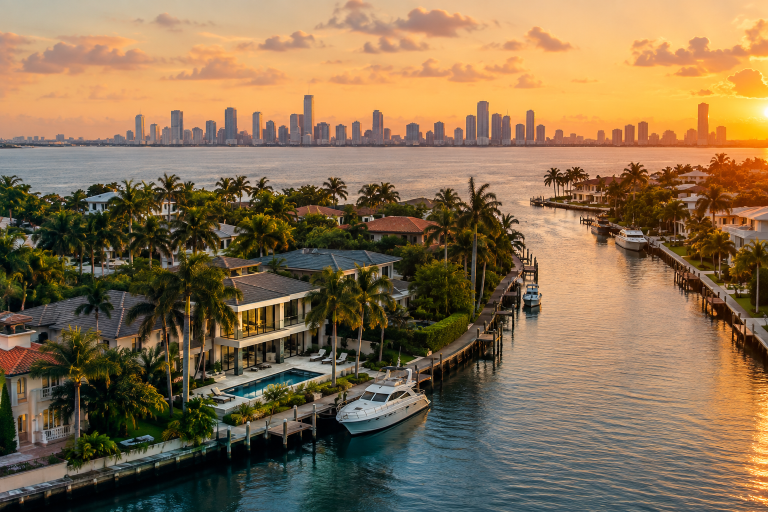
Waterfront homes can offer views, boating access, and privacy, but conditions vary block by block. Buyers should understand bridge clearance, canal depth, dock configuration, seawall condition, flood zone information, drainage, insurance costs, and exposure to salt air. A beautiful water view does not eliminate the need for detailed inspections and realistic maintenance planning.
Established Urban Neighborhoods
Urban locations can place restaurants, shopping, arts venues, hospitals, and business districts close to home. In exchange, buyers may find smaller lots, denser traffic, more construction activity, and less separation from neighboring properties. The best fit depends on whether convenience or physical privacy is the larger priority.
Quiet Residential Enclaves
Areas known for larger parcels and mature tree canopies may appeal to buyers who want outdoor space, storage, guest accommodations, and a slower residential rhythm. Review zoning, setbacks, tree rules, school boundaries, permit history, and nearby development proposals before assuming a street will remain unchanged.
New-Development Areas
New projects can bring contemporary design, amenity packages, warranties, and lock-and-leave convenience. Buyers should also consider delivery timing, developer track record, future competing supply, association budgets, and the possibility that nearby construction will continue after closing.
Build a Neighborhood Comparison Scorecard
A simple scorecard can keep a search focused when several homes create an emotional pull. Score each neighborhood from one to five in these categories:
- Location and commute: Access to work, airport routes, schools, marinas, and daily services.
- Property fit: Lot size, layout, outdoor living, parking, views, privacy, and storage.
- Ownership costs: Taxes, insurance, maintenance, utilities, staffing, and association fees.
- Resale appeal: Recent buyer demand, comparable sales, inventory, and market time.
- Lifestyle match: Dining, recreation, beach access, culture, and community character.
- Future risk: Flood exposure, construction, zoning changes, and infrastructure projects.
Study the Numbers Behind the Neighborhood
Review at least six to twelve months of comparable sales, separating single-family homes, condos, townhomes, and new construction. Focus on closed price per square foot, days on market, repeated reductions, and the relationship between active listings and recent sales. Luxury homes are not interchangeable, so adjust for renovation quality, land, water access, view corridor, building services, and condition.
Price gaps within the luxury segment can be substantial. In West Palm Beach, the typical luxury home sold for about $4.5 million in the three months ending May 2026, nearly nine times the typical non-luxury home price, illustrating the importance of studying the luxury housing price gap rather than applying broad averages to a specific home.
Review Condo Ownership Costs Carefully
Condo buyers need to look beyond monthly dues. Request the association budget, financial statements, reserve information, meeting minutes, insurance details, current or planned assessments, milestone inspection status, and rules covering rentals, pets, renovations, and occupancy. A low monthly fee may be attractive, but it can be less meaningful if deferred maintenance or reserve funding creates future obligations.
Check Flood, Storm, and Insurance Factors
Coastal ownership requires practical due diligence, not assumptions. Confirm flood-zone and elevation information, request current homeowners and flood insurance quotes, ask about prior storm damage and repairs, and inspect roofs, windows, generators, drainage, docks, and seawalls. Buyers using financing should also confirm lender insurance requirements early in the process.
Match the Property Type to the Goal
- Primary residence: Prioritize commute, storage, schools, medical access, privacy, and daily convenience.
- Second home: Consider security, airport access, management options, and lock-and-leave features.
- Investment property: Verify rental rules, realistic operating expenses, insurance, vacancy exposure, and demand.
- Long-term wealth planning: Assess land scarcity, condition, future development, neighborhood reputation, and resale depth.
A Simple Six-Step Buying Process
- Set a lifestyle brief that identifies preferred pace, location, property type, and routine.
- Choose three target neighborhoods instead of chasing every available listing.
- Estimate full carrying costs, including taxes, insurance, maintenance, financing, and association fees.
- Review comparable sales, active inventory, reductions, and market time.
- Visit each area in the mornings, evenings, and on weekends.
- Complete inspections, permit, title, association, and insurance due diligence before closing.
Conclusion: Compare the Whole Ownership Experience
The strongest South Florida luxury purchase is rarely defined by a single feature. It balances location, lifestyle, condition, carrying costs, future flexibility, and resale appeal. A disciplined neighborhood comparison gives buyers a clearer way to choose a home that works well now and remains aligned with their longer-term goals.


0 Comments