 Key Takeaways
- Choose walking gear for the individual dog, not only the breed, age, or product size label.
- Fit, freedom of movement, and secure hardware matter more than color or style.
- Straps should lie flat and not crowd the throat, front legs, or underarms.
- Inspect leashes, buckles, clips, and stitching regularly for wear or damage.
- Use visibility features and weather-appropriate materials when your route calls for them.
- Watch for rubbing, coughing, scratching, restricted movement, stress, or escape attempts.
Dog-walking gear should help your dog move comfortably while giving you reliable control wherever you walk together. The best choice is rarely the flashiest one. Whether you are comparing collars, leashes, or dog harnesses, start with your dog's build, behavior, and usual walking environment.
A good setup fits securely, stays clear of sensitive areas, and remains easy to inspect before leaving home. What works for a calm dog on neighborhood sidewalks may be a poor match for a powerful puller, a growing puppy, or a dog that becomes nervous around traffic and other dogs.
Why Gear Choice Matters
Walking equipment affects your comfort, communication, and ability to keep a dog near you as conditions change. Gear that shifts, pinches, or allows too much slack can make an ordinary walk harder to manage. A short trip to the mailbox requires different control than a long hike, a crowded event, or a route beside moving vehicles. The right system should suit the task without making normal movement difficult.
Start With the Dog, Not the Product Label
Weight ranges and breed recommendations are useful starting points, but they cannot replace measuring. Two dogs at the same weight can have very different necks, chests, shoulders, coat thickness, and proportions. Measure while your dog is standing naturally, then compare the neck and widest chest measurement with the manufacturer's sizing guidance.
Also consider your dog's age, growth stage, walking speed, pulling habits, route length, and tendency to startle or back out of equipment. A fluffy coat can hide a loose fit, while a short coat can make rubbing easier to spot. Recheck adjustments after a puppy grows, after grooming, or when your dog's weight changes.
How to Check the Fit
Fit should be checked while the dog is moving, not just while standing still. Put the gear on without attaching the leash, then follow a simple test:
- Confirm that every strap lies flat and is not twisted.
- Make sure the neck area is clear of the throat, and the straps are not pressing into the front legs.
- Slide two fingers under snug straps. They should fit with gentle resistance, not force.
- Ask your dog to walk, sit, turn, and lower their head to sniff.
- Watch whether the gear rotates, shifts backward, or limits the reach of the front legs.
- Test the setup indoors or in a calm area before relying on it near traffic or distractions.
Signs of a Poor Fit
- The harness or collar rotates noticeably around the body.
- Your dog can reverse out of the equipment.
- Straps rub the underarms or leave red, hairless, or sensitive patches.
- Your dog coughs, scratches repeatedly, freezes, or resists moving.
- The dog takes shorter steps or moves differently than usual.
When to Use a Harness, Collar, or Both
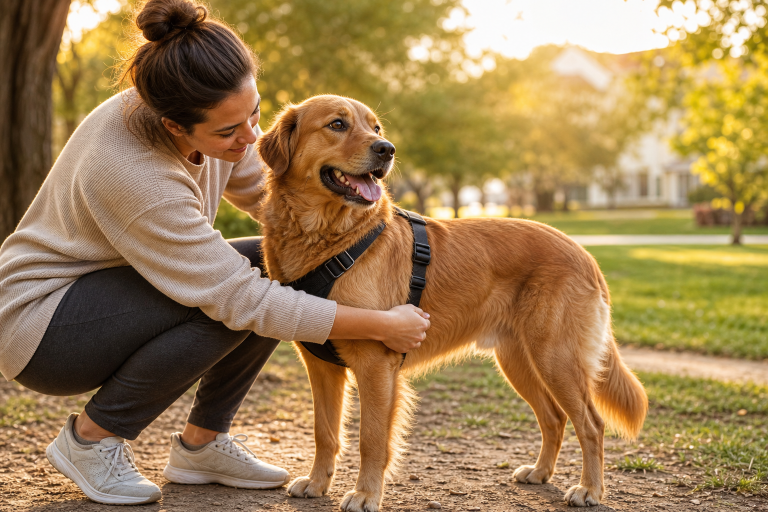
Collars are commonly used to hold identification tags and may be suitable for calm dogs that walk without pulling. Harnesses provide multiple points of contact around the torso and can be useful when a handler wants leash pressure away from the neck. Guidance on fitting a harness correctly emphasizes checking for a secure fit, free leg movement, and potential areas of rubbing.
Some owners use both a collar and a harness, with the collar carrying identification and the harness serving as the primary walking attachment. This can provide backup only when both items fit properly and do not interfere with each other. Equipment can improve handling, but it does not teach loose-leash walking on its own. Persistent pulling, lunging, or panic behavior may require patient training and help from a qualified professional.
Choosing a Leash and Reliable Hardware
Look beyond the leash color and consider the components that carry the load. The handle should feel secure in your hand, stitching should be intact, and the clip should close fully around the attachment ring. Choose a clip and leash material appropriate for your dog's size and strength, especially if your dog can lunge suddenly.
Leash Length by Setting
- Busy sidewalks: A shorter leash can help keep your dog close around driveways, crossings, and pedestrians.
- Quiet parks: A standard leash can allow room for controlled sniffing.
- Training sessions: A long line can offer distance in an open, safe space with active supervision.
- Roadside walks: Keep enough slack for comfort, but not enough for the dog to reach traffic.
Retractable, bungee, and hands-free systems are not automatically unsafe, but they demand an appropriate setting and a handler who can respond quickly. Consider the dog's strength, your balance, nearby hazards, and the level of control the route requires.
Planning for Visibility and Weather
Low-light walks call for gear that is easy for others to notice. Reflective trim, bright materials, and small lights can make a dog and handler more visible. Keep your dog closer to driveways and crossings, and confirm that any lights or accessories are firmly attached before heading out.
In warm conditions, breathable gear and shorter walks during cooler parts of the day can improve comfort. Heavy panting, weakness, vomiting, confusion, trouble breathing, or unsteady movement can indicate heat-related illness. The signs of heat-related illness in dogs should prompt you to stop activity, move to a cooler area, and contact a veterinarian promptly.
Rain, snow, and road salt can change how a gear feels and functions. Dry your dog and the equipment after wet walks, and remove grit from clips and buckles. Wet straps may rub differently from dry straps, so check the skin beneath contact points after longer outings.
Common Walking-Gear Mistakes
- Choosing by appearance instead of measurements and movement.
- Failing to adjust gear as a puppy grows or a dog's body changes.
- Ignoring small areas of redness, hair loss, or repeated scratching.
- Assuming a "no-pull" label guarantees training results.
- Clipping in without checking buckles, rings, and leash hardware.
- Continuing to use frayed, chewed, cracked, or unreliable equipment.
A Simple Gear Inspection Routine
Once a week, and before a longer outing, run your fingers along the leash and straps. Look for fraying, loose threads, cracked plastic, bent hardware, and buckles that do not close smoothly. Open and close each clip several times. Wash equipment according to its care instructions, then retire anything that no longer fits securely or cannot be trusted under normal use.
Common Questions
How Tight Should Walking Gear Be?
Use the two-finger check as a starting point, then watch your dog move. Gear can feel snug while standing, but still rub or limit shoulder motion during a walk.
Should a Dog Wear a Collar and a Harness?
Some dogs do well with both. The collar can hold identification while the harness is used for the leash, provided neither item crowds or rubs the other.
How Often Should a Harness Be Replaced?
Replace it when it is damaged, no longer fits, cannot be cleaned effectively, or no longer stays secure. Frequency depends on use, weather exposure, washing, chewing, and changes in your dog's body.
Can Better Gear Stop Pulling?
Better gear may improve comfort and handling, but reliable loose-leash behavior comes from consistent training, rewards, and realistic walking conditions.
Final Thoughts
Safer dog-walking gear is not necessarily the most expensive or fashionable option. It is equipment that fits your individual dog, supports comfortable movement, matches the route, and remains in good working condition. A few minutes spent measuring, testing, and inspecting can make daily walks more comfortable and more manageable for both ends of the leash.


0 Comments