Key Takeaways
- Backflow is the unwanted reversal of water or other substances into a drinking-water system.
- Outdoor hoses, irrigation equipment, private wells, pools, and chemical containers can create cross-connection risks.
- A backflow assembly may appear normal even when internal components are not operating correctly.
- Testing requirements depend on the property, water service, type of assembly, and local utility rules.
- Keeping notices, test reports, repair invoices, and device information together makes future compliance easier.
Wake Forest homeowners often think first about plumbing leaks, water heaters, and clogged drains, but backflow prevention deserves a place on the home-maintenance list too. From irrigation systems that keep summer lawns green to garden hoses used for outdoor cleanup, several everyday connections can create a path for non-drinking water to move toward the potable water supply. Scheduling professional backflow testing helps confirm that a testable assembly is operating as intended and that required paperwork is handled on time.
In a growing community such as Wake Forest, protecting the public water supply is a shared responsibility. Understanding where backflow risks can occur, what a device does, and how local testing requirements apply can help homeowners avoid last-minute notices, preventable repairs, and unsafe cross-connections.
What Backflow Means in Plain Language
Backflow occurs when water moves in the opposite direction from its intended flow. Normally, water travels from the public supply into a home. During a pressure change, however, water from a connected source can potentially be pulled or pushed back toward the drinking-water line.
Two conditions can lead to this problem. Backsiphonage can occur when pressure in the supply line drops, such as during heavy water use, a main break, or firefighting. Backpressure can occur when the pressure on a property exceeds the pressure in the public line, sometimes due to pumps or certain mechanical systems. A garden hose left inside a bucket containing fertilizer solution is a simple example of why direction of flow matters.
Why Cross-Connections Deserve Attention
A cross-connection is an actual or potential link between drinking water and a source that may contain non-potable water, chemicals, or other contaminants. The U.S. Environmental Protection Agency explains that contamination in distribution systems commonly occurs at these types of connections, which is why cross-connection control is an important part of water-system protection.
At a Wake Forest home, a risk may be temporary, such as a hose submerged in a pool, utility sink, or pesticide container. It can also be part of a permanent installation, including irrigation piping, a boiler, or water-treatment equipment. The concern is not whether the connection is used every day. It is what could enter the drinking-water system if the conditions allow reverse flow.
Common Backflow Prevention Devices
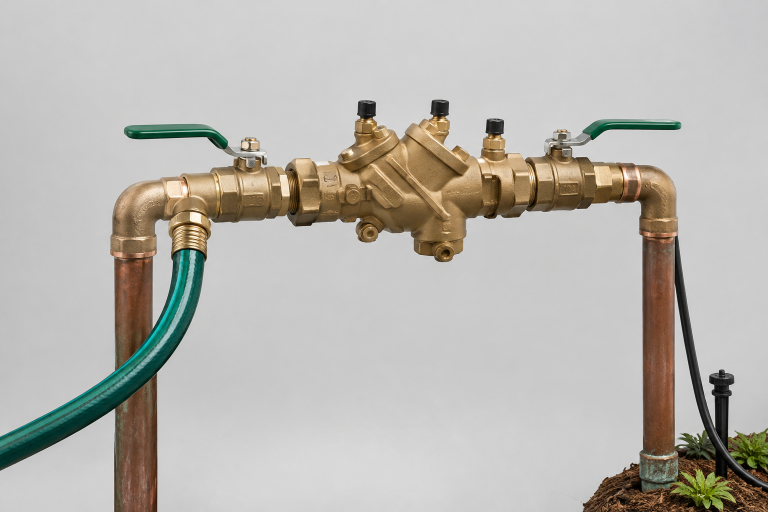
Backflow protection is not one-size-fits-all. The appropriate method depends on the plumbing connection, the possible hazard, and local code or utility requirements. Common forms of protection include:
- Air gaps: A physical open space between a water outlet and the receiving container.
- Atmospheric or pressure vacuum breakers: Devices commonly used to help protect against backsiphonage in suitable applications.
- Double-check assemblies: Mechanical assemblies that use check valves for certain lower-hazard situations.
- Reduced-pressure zone assemblies: More robust assemblies used where a higher level of protection is required.
Do not choose a replacement device based solely on its size, appearance, or an online photo. Device selection and installation should match the actual connection and local requirements.
Places Homeowners May Find Backflow Risks
Outdoor Water Use
Wake Forest’s warm growing season makes irrigation systems, hose bibs, and outdoor faucets especially common. Keep hoses out of pools, buckets, rain barrels, ponds, and chemical mixtures. A simple hose connection can become a cross-connection when its open end is placed below the surface of contaminated water.
Irrigation, Wells, and Water Features
Lawn irrigation deserves special attention because it may come into contact with soil, fertilizer, pesticides, and standing water. Private irrigation wells, swimming pools, hot tubs, decorative ponds, and similar features can also affect the level of backflow protection a property needs. Raleigh Water notes that a reduced-pressure assembly is required for residential lawn irrigation and for properties that use public domestic water while also having a private irrigation well within the property limits.
Why Periodic Testing Matters
Backflow assemblies have mechanical parts that can wear, stick, corrode, or deteriorate. Freezing temperatures, landscape work, accidental damage, shifting soil, and changes in water pressure can all affect an outdoor assembly. Because internal performance cannot be confirmed with a quick visual check, a proper operational test is different from simply looking over the device.
During testing, a qualified tester uses approved equipment to evaluate pressure and valve performance. The results are recorded on the required form. If an assembly does not pass, it may need cleaning, repair, or replacement, followed by a successful retest.
What a Typical Test Appointment May Include
- Reviewing the utility notice, deadline, and device information.
- Locating the assembly and confirming that it is accessible.
- Temporarily operating the assembly’s shutoff valves as needed for the test.
- Checking valve operation and pressure readings with testing equipment.
- Completing the required report and explaining the outcome.
- Submitting the passing report through the applicable utility process when required.
How Wake Forest Requirements May Affect Homeowners
Testing schedules, notification methods, tester qualifications, and submission procedures can vary by service area and assembly type. Wake Forest is among the merger towns addressed by Raleigh Water’s program, so homeowners should rely on their own notice and account information rather than assuming a neighbor’s deadline applies to them.
For current details, Raleigh Water’s backflow guidance for Wake Forest and other merger towns explains testing notices, compliance, failed assemblies, and tester requirements. Checking the official guidance before scheduling can help homeowners confirm what applies to their particular property.
What to Do if an Assembly Fails
Ask for a clear explanation of the failed reading or component, then request a written estimate for the recommended repair or replacement. Confirm who is authorized to perform the work, whether another test is required afterward, and how the passing report will be submitted. Keep the initial failed report, as well as the final passing report, along with other home records.
A Simple Homeowner Checklist
- Find the assembly before the appointment and make sure it can be reached safely.
- Clear away mulch, leaves, tools, storage items, and overgrown plants.
- Review the notice for the exact due date and device details.
- Ask whether someone must be present during the visit.
- Save the completed test report and any repair documentation.
- Mark the next expected testing date on a calendar.
Conclusion
Backflow prevention is a practical way for Wake Forest homeowners to protect safe drinking water at home and throughout the community. By watching for cross-connections, keeping outdoor water use safe, following utility instructions, and acting promptly when a test or repair is needed, homeowners can make this small but important part of plumbing maintenance far more manageable.


0 Comments