Key Takeaways
- Focus on a few satisfying stops instead of trying to visit as many restaurants as possible.
- Choose one main neighborhood to reduce travel time and keep the day manageable.
- Match the food crawl to the occasion, group size, appetite, and preferred pace.
- Set a realistic food budget that accounts for tax, tips, drinks, and reservation costs.
- Build around two or three stops, leaving enough time between larger meals to walk and explore.
- Mix full-service restaurants with bakeries, markets, food halls, and casual food counters for variety.
- Check current hours, menus, reservations, dietary options, and food-safety information before visiting.
- Keep a nearby backup option in case of long waits, weather changes, or unexpected closures.
- Leave room for spontaneous discoveries, since an unplanned neighborhood stop can become part of the experience.
New York City rewards diners who plan for a good day rather than trying to conquer an impossible list. A thoughtful food crawl keeps the focus on a few satisfying stops, time to walk, and the pleasure of discovering how a neighborhood feels between meals. For ideas organized around different parts of the city, https://frankiapp.com/guides/best-restaurants-in-new-york can be a useful starting point. The best route is personal. It should reflect whether you are meeting friends, planning a date, exploring on your own, or simply looking for an affordable afternoon in New York City. Instead of making every stop a major meal, build a flexible sequence of small moments that leaves room for appetite, weather, and neighborhood surprises.
Why Food Crawls Work Better Than Long Restaurant Lists
A long list can create more pressure than inspiration. A short route gives every choice a purpose and reduces time spent studying maps, waiting for trains, or debating the next move. New York City has thousands of dining options, so narrowing the day to one area and a few formats is practical. The city's inspection lookup covers roughly 29,000 restaurants, which illustrates the value of a clear filter before you head out. A good crawl is not a contest to eat the most food. It is a way to enjoy a neighborhood at a comfortable pace, with enough space for conversation, browsing, and one unplanned stop that looks too good to skip.
Choose One Main Neighborhood
Start with a neighborhood, not a single must-visit restaurant. Look for an area where coffee, a casual bite, a sit-down meal, and dessert are within a walk that your group will actually enjoy. Subway access matters, but so do rain, heat, crowded sidewalks, strollers, and everyone's energy level.
- Choose one central area with several food styles nearby.
- Look for options that work at different times of day.
- Use a nearby neighborhood only when the transition is simple.
- Keep the route walkable, with no more than one meaningful extension.
Match the Route to Your Mood
The same blocks can feel completely different depending on the occasion. Decide what kind of outing you want before comparing menus.
- Casual day: Begin with coffee, add a counter-service lunch, and finish with a pastry or ice cream.
- Date-friendly route: Choose a relaxed first stop, a polished main meal, and a final drink or dessert with comfortable seating.
- Group outing: Favor shareable plates, flexible seating, and menus that offer several dietary choices.
- Solo food walk: Use bar seats, bakeries, food halls, and smaller portions.
- Late-night route: Confirm when the kitchen closes, since a business may remain open after its full menu is unavailable.
Set a Clear Food Budget
A budget protects the day's fun. Pick a total amount per person, decide whether drinks are included, and leave room for tax and tip. If one stop is a higher-cost reservation, make the other stops lighter and simpler.
- Low-cost crawl: Focus on bakeries, markets, snack counters, and shareable bites.
- Mid-range crawl: Build around one sit-down meal, with less expensive snacks before or after.
- Celebration crawl: Reserve the main meal first, then add a light opening stop and a relaxed finish.
Build a Three-Stop Route
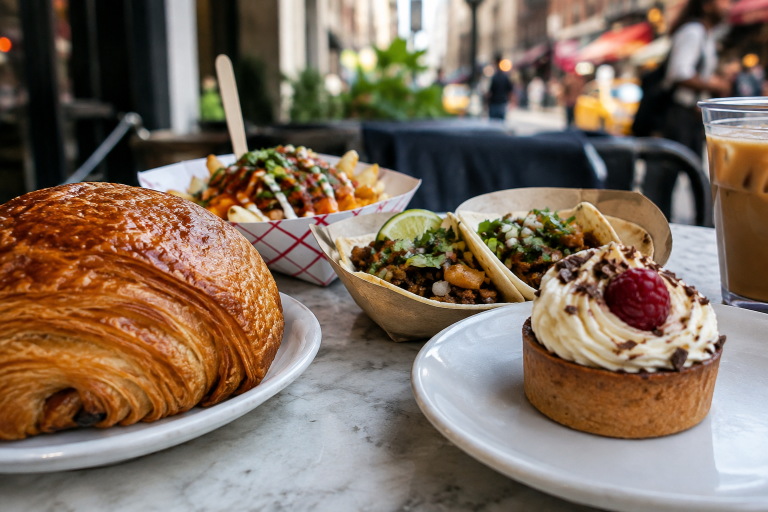
Three stops are enough for most food crawls. Start with something that sets the tone, such as coffee, breakfast, or a small savory snack. Make the second stop the main event, based on the group's appetite and budget. End with dessert, a drink, or another modest bite that feels like a finish rather than a second dinner. Leave roughly 60 to 90 minutes between larger meals when possible. That gap creates breathing room for walking, shopping, photos, and the occasional line without making the day feel rushed.
Mix Restaurants, Markets, and Casual Stops
Variety makes a crawl more memorable. Pair a full-service restaurant with a bakery, market, food hall, or quick counter. Avoid ordering the same style of food three times in a row. Many immigrant communities have shaped New York's dining identity, as the overview of New York City cuisine illustrates, so a mixed approach can better reflect the city than a single-note menu marathon. Choose contrasts: something hot followed by something cold, a crisp snack before a comforting main, or a savory meal followed by a sweet finish. Include at least one place where small portions are easy to order.
Check Hours, Reservations, and Food Safety
Check each business's official information on the day of your visit. Hours, menus, reservation policies, and kitchen schedules can change. Review menus for allergens and dietary needs, and keep one backup nearby in case the wait is longer than expected. For an added planning step, use New York City's restaurant inspection lookup to review inspection results. The city assigns letter grades based on food safety inspection scores, so it is an easy resource to consult before choosing where to eat.
Sample Food Crawl Plans
A Relaxed Afternoon Route
- Start with coffee and a baked item.
- Walk through nearby shops, a market, or a park.
- Share a late lunch.
- Finish with ice cream, a pastry, or another small dessert.
A Budget-Friendly Evening Route
- Begin with an inexpensive snack.
- Choose one main filling meal.
- Split dessert or a late-night bite.
- Use transit only when it saves meaningful time.
A Celebration Route
- Book the main meal first.
- Keep the first stop flexible and light.
- Allow extra time for conversation and delays.
- Choose a final stop where the group can sit comfortably.
Common Food Crawl Mistakes
- Trying to cover too many boroughs in one afternoon.
- Booking every stop and leaving no room for spontaneity.
- Ignoring walking and travel time.
- Ordering full portions at every location.
- Forgetting tax, tip, drinks, and reservation-related costs.
- Failing to confirm current hours and menu details.
Final Tips for a Better Day of Eating
Pick one main neighborhood, set a realistic budget, and plan two or three stops that genuinely fit the group. Mix portion sizes and food styles, leave time to walk, and keep a backup option nearby. It can also help to check opening hours and reservation requirements in advance, especially for popular spots or weekend visits. Give everyone enough time to enjoy each stop instead of rushing to stay on schedule. A great New York City food crawl is not about collecting the most stops. It is about creating a day that suits your appetite, your company, and the city's pace. Leave a little room for an unexpected bakery, coffee shop, market, or neighborhood favorite along the way, since some of the most enjoyable parts of the day may not be on the original plan.


0 Comments